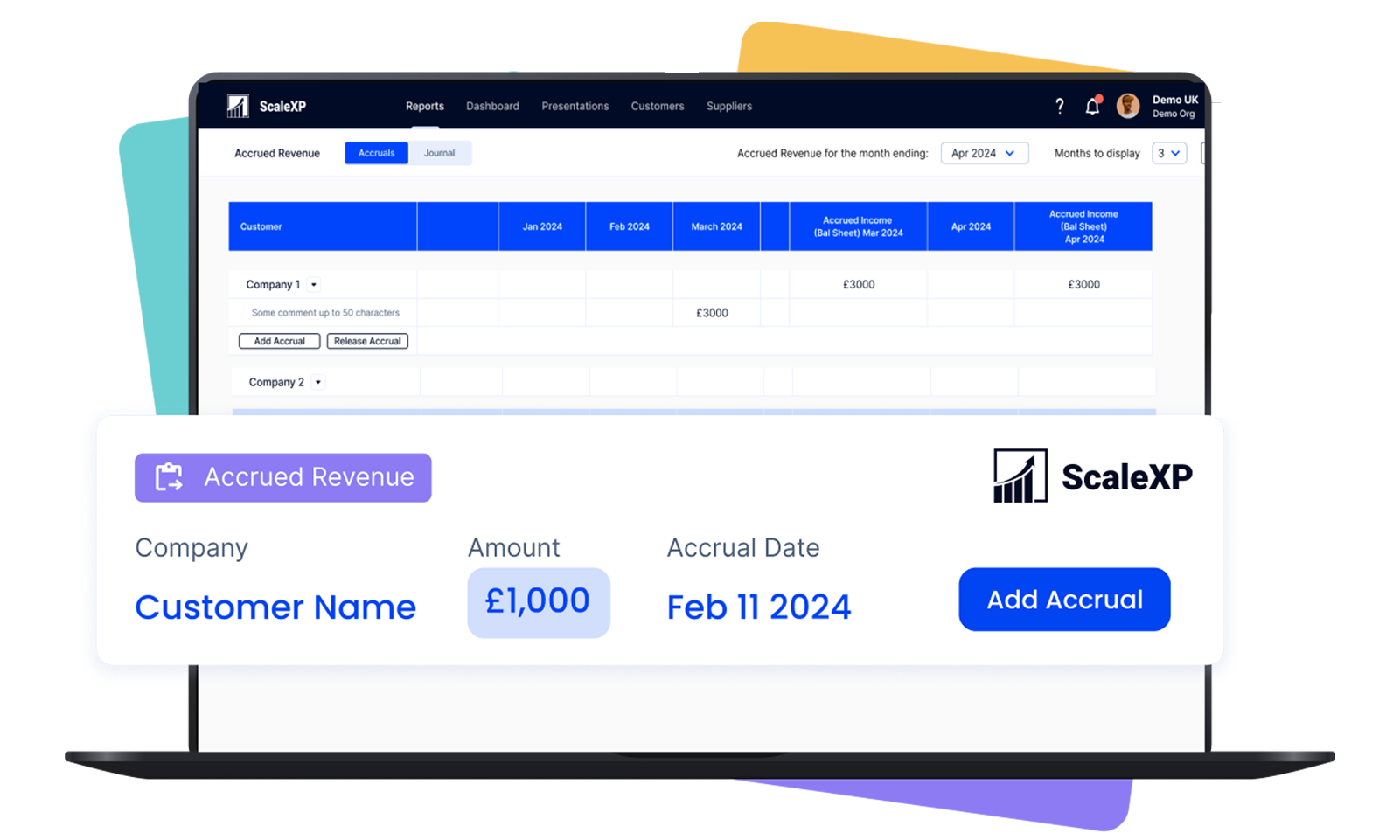
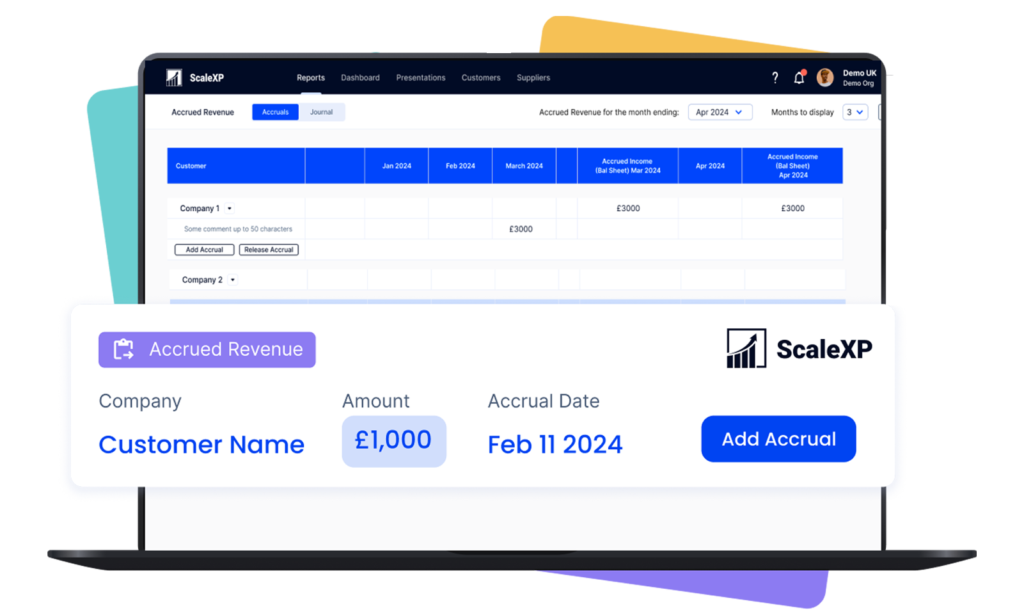
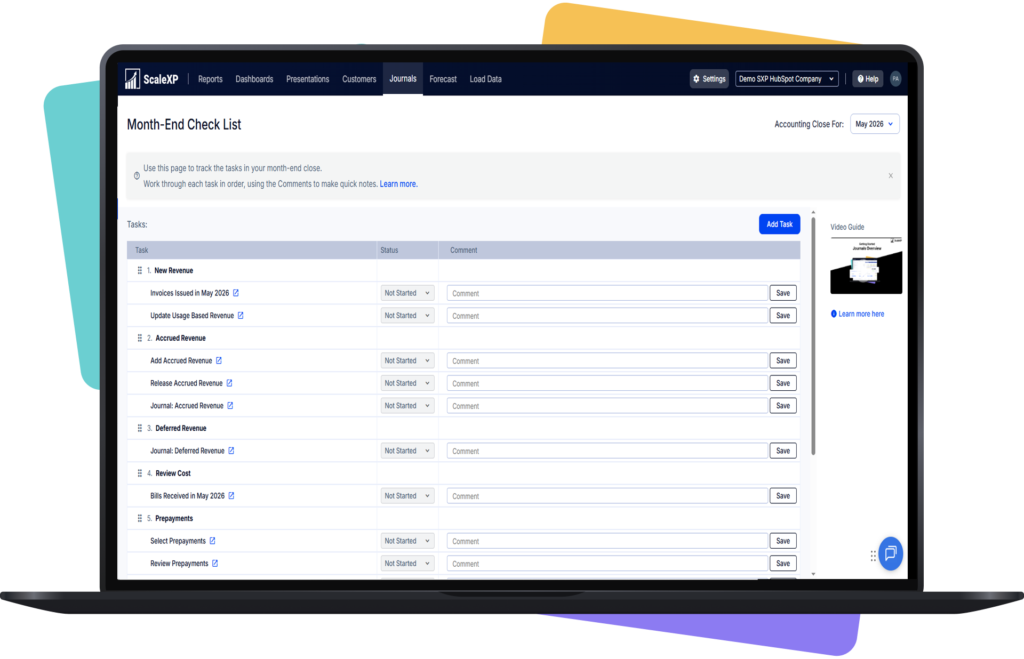
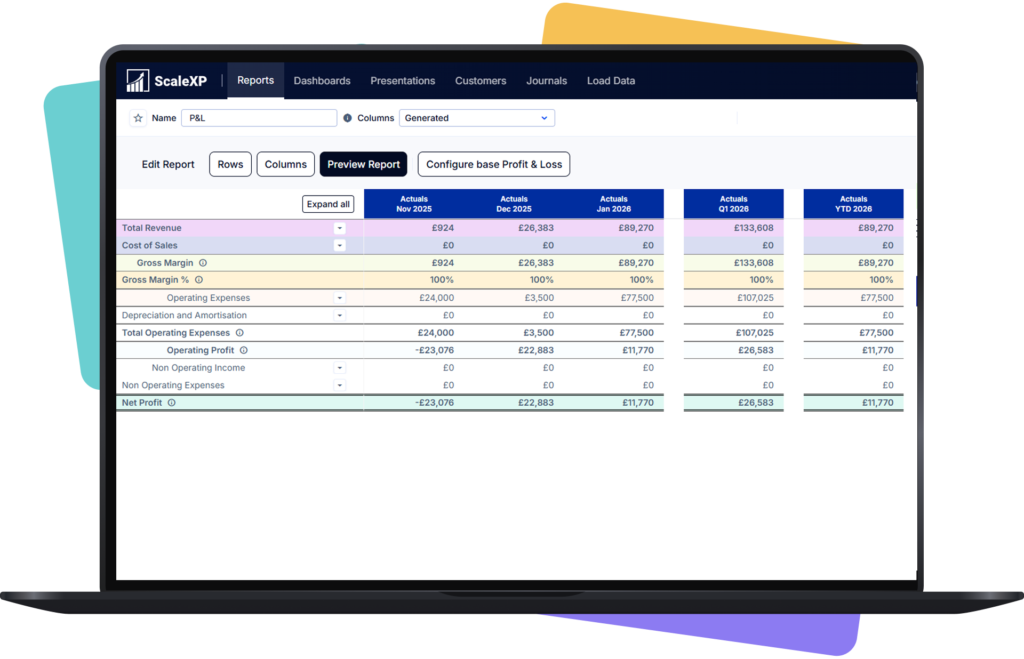
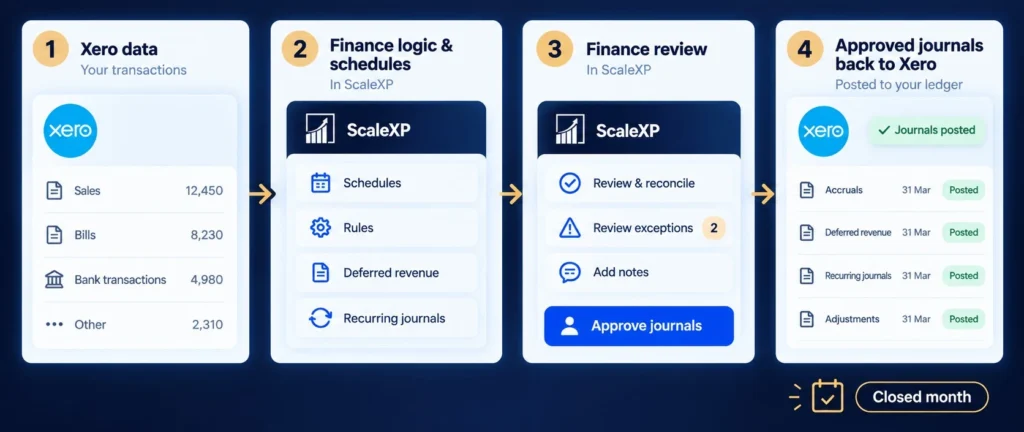
ScaleXP identifies revenue earned but not yet invoiced by analyzing invoice data, draft invoices, repeating invoices, even CRM data can be included. The platform:
Automatically calculates accrued income
Eliminates inevitable errors in spreadsheet accrual schedules
ScaleXP is an approved app for leading accounting & CRM systems
Accrued income is often managed in spreadsheets
Accrued income is usually tracked in a spreadsheet kept beside the ledger, and that is where the errors start. Values are recalculated by hand each month, reversals are tracked manually after invoicing, and a late change to a contract is easy to overlook.
Spreadsheets have errors
Connections to your CRM enable seamless communication without removing finance control
Accrual reversals are tracked manually after invoicing, making it easy to overlook a late change
ScaleXP automates the calculation itself. It reads accounting and operational data to find revenue that has been earned but not yet invoiced, applies models built around IFRS, FRS 102, ASC 606 and US GAAP treatment to produce structured journal entries, and flags each accrual for release as soon as the invoice is issued.
Reads accounting and operational data to identify revenue that has been earned but not yet invoiced.
Has AI models trained on IFRS, FRS102, ASC 606, and GAAP frameworks automatically calculate accrued income and generate structured journal entries.
Flags accrual releases as soon as the invoice is issued.
How It Works
ScaleXP works from the records you already have. It reads the data and text on invoices, imports draft and repeating invoices before they are issued, and connects to HubSpot, Salesforce or Pipedrive, so contracted work that has not yet reached the ledger is still counted.
Reads all data and text on invoices
Imports draft invoices before they are issued
Imports repeating invoices to detect recurring revenue patterns
Connects to CRM systems including HubSpot, Salesforce, and Pipedrive.
ScaleXP automates earned but uninvoiced revenue under IFRS and GAAP, with journals using Xero Tracking Codes and QuickBooks Classes for precise allocation and a complete audit trail.
What Changes for Your Team
Before ScaleXP
Accrued income calculated manually in spreadsheets
Journals prepared during month-end close
Matching logic updated manually each period
Accrual reversals tracked manually after invoicing
After ScaleXP
Accrued income calculated automatically from accounting and CRM data
Journals prepared automatically for finance review
Revenue matching rules applied consistently across periods
Accrual reversals triggered automatically when invoices are issued
Save Time Every Month
Automated accrued income calculations replace the spreadsheet work of building accrual schedules and preparing journals each month, leaving finance to review and approve the results.
Reduced spreadsheet preparation
Faster close preparation
More time reviewing financial results
Improve Revenue Recognition Accuracy
Accrued income is calculated consistently across periods, with AI models built for IFRS and GAAP ensuring accurate revenue recognition in financial reports.
Accurate revenue reporting
Reduced risk of missed accrual adjustments
Consistent accounting policy application
Strengthen Financial Governance
Structured accrual workflows deliver transparency and audit readiness, giving finance leaders full traceability across schedules, journals, and invoice activity.
Clear audit trail for accrued income journals
Transparent revenue recognition processes
Improved accounting policy control
Spreadsheet Accruals vs ScaleXP Automation
Spreadsheet Accruals
Revenue accrual calculations are maintained manually
Matching rules updated each accounting period
Journals created manually during close
Limited visibility into revenue earned but not yet invoiced
ScaleXP Accrual Automation
Accrued income calculated automatically from accounting and CRM data
AI applies consistent IFRS and GAAP accounting logic
Journals posted to Xero or QuickBooks once finance approves them
Real-time visibility into earned but unbilled revenue
Eliminate Spreadsheet Accrual Schedules: Automated accrual calculations replace spreadsheet logic used for tracking earned but unbilled revenue.
Increase Accrued Income Reporting Accuracy and Control: Finance leaders gain reliable accrued income calculations and consistent revenue recognition across financial reports.
ScaleXP clearly understands the pain points of monthly close. All my accrual and deferred revenue manual journals in Xero are now automated — ScaleXP reads invoices and bills directly, pushes entries through, and maintains a full audit trail of every change. What used to be a risky, Excel-heavy process is now a half-day job.
We started using ScaleXP fully in the last few months and are already finding that its slick automation is saving us numerous hours a month. Gone are the days of running lengthy reports and analyzing data. ScaleXP is a must for anyone who wants to streamline their accounts and save time. Love it.
Our experience with ScaleXP has been outstanding. We can now accurately track unearned revenue from Xero, something we struggled with before, and it’s made a significant impact on our financial reporting. Just as importantly, we operate across multiple locations tracked in Xero, and previously had no effective way to consolidate that data. ScaleXP solved that seamlessly. The KPIs and customizable reports have completely streamlined our month-end process. Their onboarding and support are exceptional, and Spencer was especially responsive and helpful throughout.
Accrued income is revenue earned during the current accounting period that has not yet been invoiced or received. Under accrual accounting, it is recognized when the service or performance obligation is delivered rather than when billing occurs. The entry normally increases revenue and records an accrued-income asset, which is later cleared when the invoice is raised. Accurate accrued-income accounting prevents earned revenue from being omitted and gives management a more faithful view of period performance.
Accrued income is revenue already earned but not yet invoiced, whereas deferred revenue is money invoiced or received before the related service has been delivered. Accrued income is generally recorded as an asset and increases current-period revenue. Deferred revenue is recorded as a liability until it is earned. ScaleXP can manage both timing differences using contract, invoice and service-period data, helping finance reconcile what was sold, billed, recognized, accrued and still deferred.
ScaleXP analyzes accounting, billing and contract data to identify revenue earned but not yet invoiced. It applies the agreed service period and recognition logic, calculates the accrued amount by month, builds a supporting schedule and prepares a journal for finance review. When billing subsequently occurs, the accrued balance can be released through the controlled workflow. This replaces manual spreadsheet calculations while retaining customer-level detail, accounting-period visibility and an audit trail from source data to journal.
ScaleXP can use posted invoices, draft invoices, repeating invoices and contract information from CRM systems such as HubSpot, Salesforce and Pipedrive. CRM data can supply customer, product, value, start date, end date and billing terms before the final invoice exists. Combining commercial and accounting data helps finance identify earned revenue earlier, calculate the correct period allocation and investigate contracts that appear to have been delivered but not billed.
Yes. ScaleXP can compare contract or service periods with invoice activity to separate recognized revenue, accrued income and deferred revenue. Finance receives a clearer view of what has been earned, what remains unbilled and what must stay deferred until future delivery. The reported figures remain drillable to the customer, contract and source transaction, which improves month-end review and makes it easier to explain movements in revenue, accrued-income assets and deferred-revenue liabilities.
CRM contracts provide commercial facts that may not yet exist in the accounting ledger, including contract dates, products, values and billing schedules. ScaleXP combines those details with Xero or QuickBooks data to determine whether revenue has been earned before invoicing. This helps finance calculate accrued income earlier, identify missing or delayed bills and reconcile Sales commitments to accounting outcomes. It is especially useful for SaaS and subscription businesses with milestone, annual or non-standard billing arrangements.
Yes. ScaleXP works alongside Xero and QuickBooks Online, importing relevant invoice and transaction data and preparing accrued-income schedules and journals for review. Approved entries can flow back to the accounting system, which remains the system of record. ScaleXP also supports reporting dimensions such as Xero Tracking Codes and QuickBooks Classes, allowing accrued revenue to remain useful in department, product, entity or management-reporting analysis.
Accrued-income automation highlights revenue that appears to have been earned but has not yet been invoiced. By comparing CRM contracts, service periods and accounting activity, ScaleXP can expose missing billing, delayed invoices or values that do not match the commercial agreement. Finance can investigate the exception before it becomes lost revenue or a later-period surprise. The same connected data also strengthens sold-versus-billed reconciliation and gives teams a clearer route from contract to invoice, recognition and cash.
“
“Making the month-end revenue recognition process simplified.”
Accrued income
Bring accrued income under monthly control.
See timing differences identified and turned into clear, reviewable schedules and journals.
See how ScaleXP works with Xero, QuickBooks or Zoho Books.
In a 30-minute demo, we’ll show the relevant workflows using example data and discuss how they could apply to your finance process. Complex requirements? Discuss them with us first.