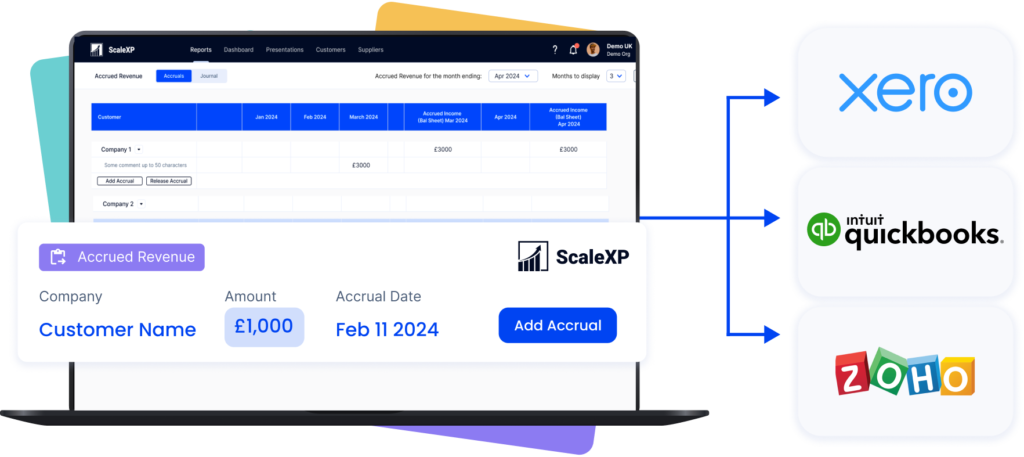
ScaleXP is an approved app for leading accounting & CRM systems
Spreadsheet forecasts break quickly
Forecasts become unreliable when billing, CRM, and renewal data sit in different systems. Finance teams spend too much time updating assumptions and too little time explaining the numbers.
Renewals tracked outside the forecast
Pipeline and billing rarely stay aligned
Forecasts age as soon as data changes
Leadership challenges unsupported assumptions
Forecast revenue with ScaleXP
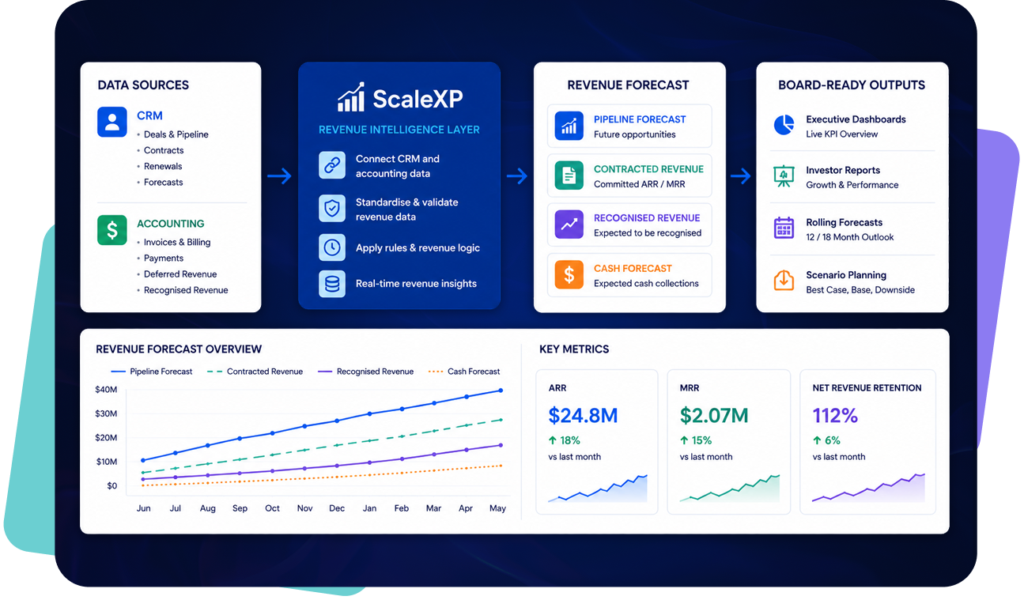
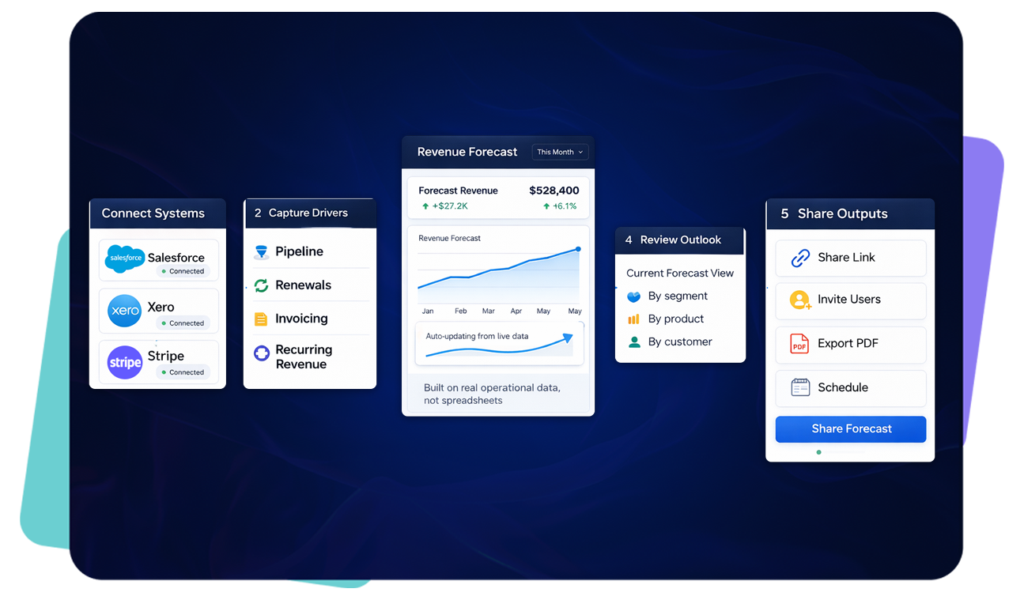
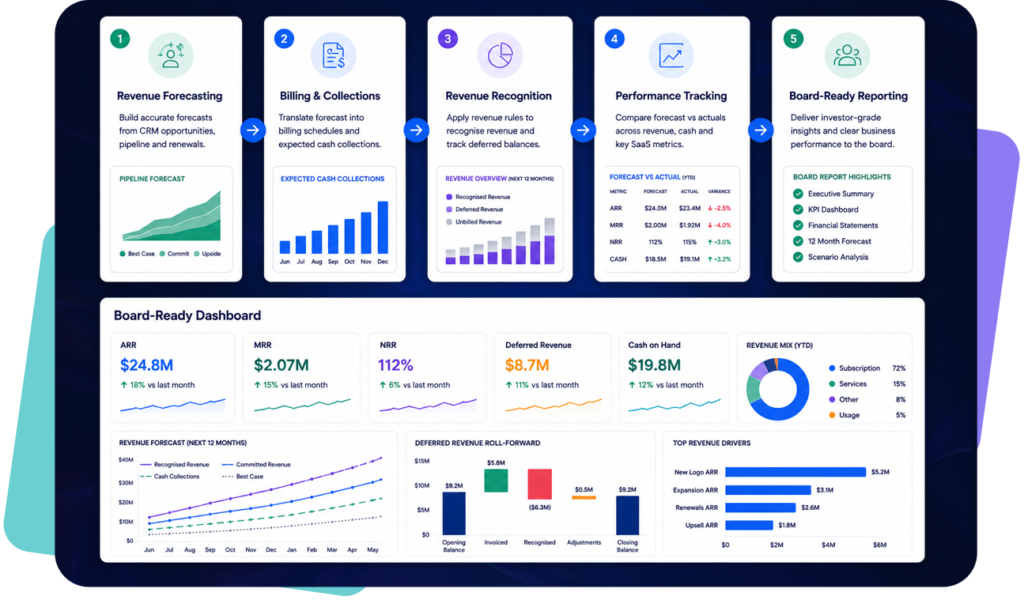
ScaleXP gives finance teams a connected revenue forecasting workflow built on live CRM, billing, and accounting data. It brings the core forecast drivers together in one place, so revenue projections stay current and easier to explain.
Instead of maintaining a manual spreadsheet model, finance can work from operational data that updates as deals move, renewals change, and invoices are raised. That improves control, reduces manual rework, and makes the forecast more credible.
Revenue forecasting from CRM and accounting data
Revenue forecasts become unreliable when pipeline, renewals, billing schedules and accounting actuals are managed separately.
CRM data shows what is expected to close, renew, expand or churn. Accounting data shows what has been invoiced, recognised, deferred and collected.
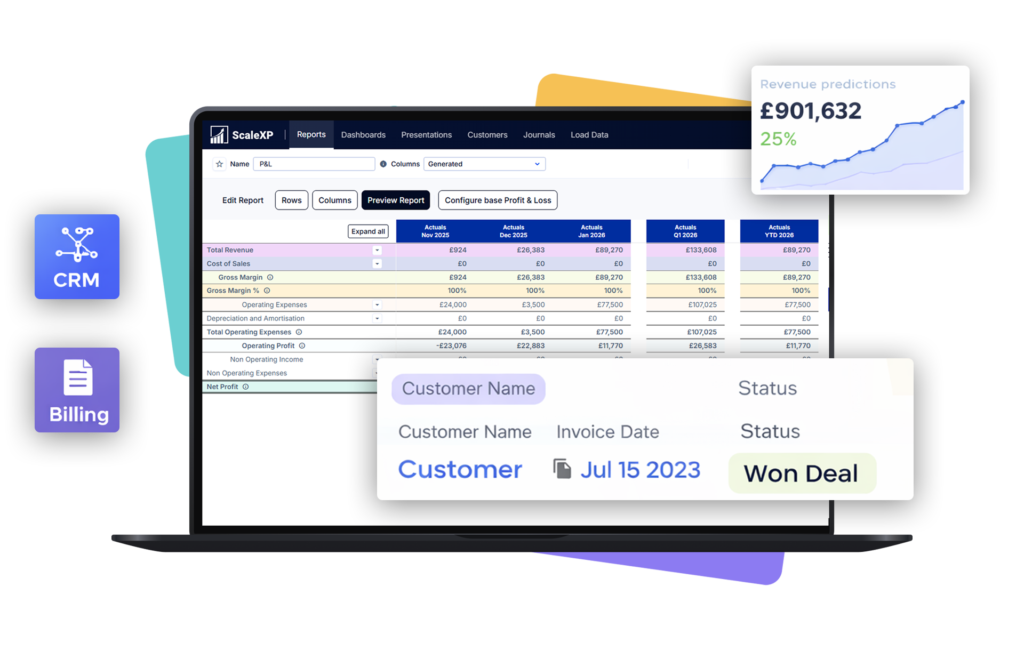
ScaleXP connects CRM, billing and accounting data so finance teams can forecast revenue from a more complete and finance-reviewed data layer.
This helps CFOs move beyond spreadsheet-based forecasting and create forecasts that are easier to explain, reconcile and update.
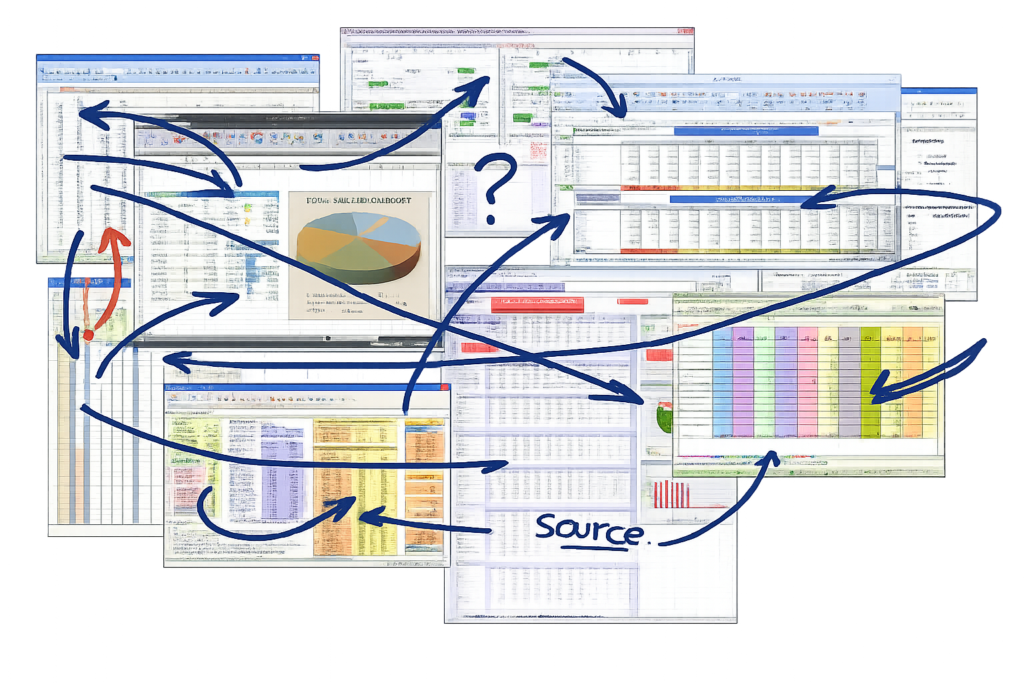
Finance teams manage revenue forecasting in disconnected spreadsheets.
CRM exports, renewal lists, billing schedules and accounting actuals are combined manually.
This takes time and makes forecasts harder to keep accurate.
After ScaleXP
ScaleXP moves revenue forecasting into connected revenue data.
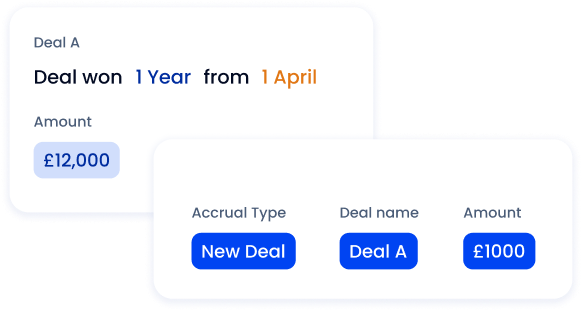
Forecasts can be built from pipeline, renewals and billing schedules.
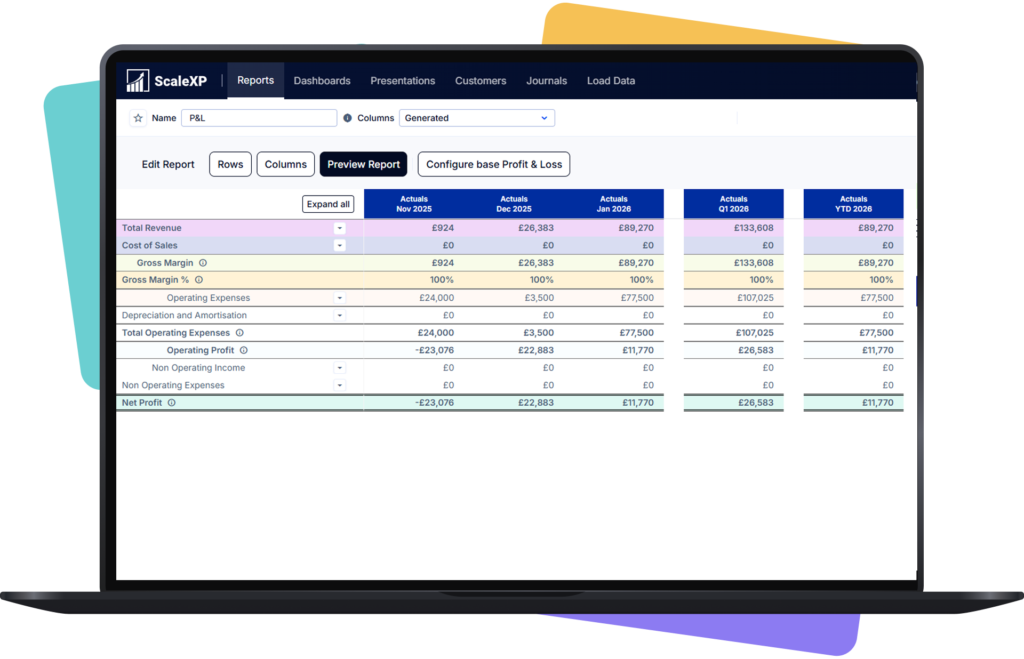
Forecast revenue can be compared with accounting actuals.
Visibility improves over renewals, churn and expansion.
CRM revenue forecasting for SaaS finance teams
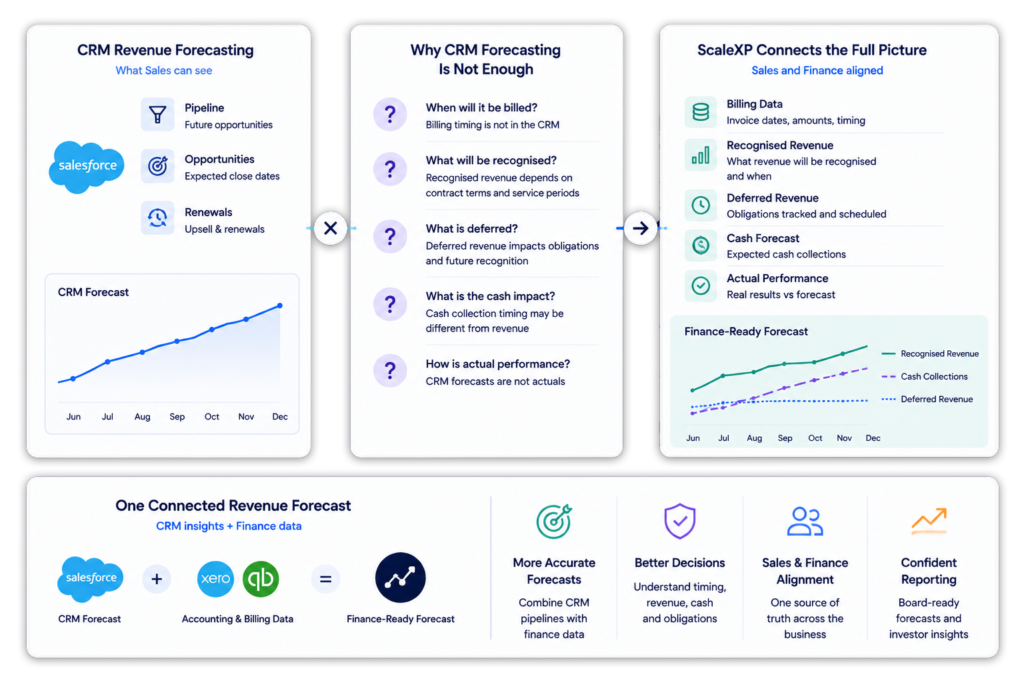
CRM revenue forecasting is useful, but it is not enough on its own.
Sales teams may forecast pipeline, opportunities and renewals in the CRM. Finance teams still need to understand billing timing, recognised revenue, deferred revenue, cash impact and actual performance.
ScaleXP helps connect CRM revenue forecasting with finance data.
This helps CFOs answer questions such as:
Which opportunities are expected to convert into revenue?
Which renewals are at risk?
How much revenue is already contracted?
How much forecast revenue has already been billed?
How does forecast revenue compare with actual revenue?
ScaleXP reduces the manual effort needed to keep forecasts current. Finance teams spend less time collecting inputs and more time reviewing movement in revenue drivers.
Less spreadsheet maintenance each cycle
Fewer manual updates from CRM exports
Faster refresh when invoicing changes
Quicker preparation for forecast reviews
Better reporting clarity
When the forecast is built from live operational data, it becomes easier to explain the movement behind the numbers. That improves reporting quality for CFOs, finance managers, and leadership teams.
Clearer link between activity and forecast
Easier explanation of revenue movement
Better visibility into recurring revenue trends
More confidence in board discussions
Lower spreadsheet risk
Disconnected models create version issues, stale assumptions, and hidden errors. A connected forecasting workflow helps reduce those risks by keeping billing, CRM, and finance inputs closer together.
Fewer version-control problems
Less manual copying between systems
Reduced reliance on offline trackers
Stronger control over forecast inputs
Stronger operational control
Finance gains more control when forecast drivers are visible and current. Renewals, pipeline, and invoiced revenue can be reviewed as part of one process instead of several disconnected ones.
Renewals included more systematically
Pipeline impact easier to review
Revenue inputs stay closer to source
Forecast ownership becomes more structured
With the ScaleXP platform, you can:
Build forecasts from live drivers: Use renewals, pipeline, billing, and finance data together. Keep the forecast closer to how revenue actually moves.
Reduce spreadsheet forecasting risk: Replace fragmented models with a more controlled workflow. Cut the manual effort needed to keep forecasts current.
Improve reporting confidence fast: Give leadership a forecast backed by current operational data. Explain assumptions and changes with greater clarity.
Forecasting is most useful when it supports board-level decisions.
Finance teams need to explain not only the forecast number, but also the assumptions behind it. That includes pipeline conversion, renewals, churn, expansion, billing timing and actual revenue performance.
ScaleXP helps finance teams connect forecast data with SaaS metrics and board reporting.
Revenue forecasting software helps finance teams estimate future revenue using data such as pipeline, renewals, billing schedules, revenue schedules and accounting actuals.
ScaleXP helps finance teams forecast revenue from connected CRM, billing and accounting data instead of rebuilding forecasts in spreadsheets.
What is revenue forecasting from CRM data?
Revenue forecasting from CRM data uses opportunities, pipeline, renewals, expected close dates, products, customers and sales assumptions to estimate future revenue.
ScaleXP connects CRM data with billing and accounting data so finance teams can create forecasts that are easier to reconcile and explain.
Can ScaleXP forecast revenue from accounting data?
Yes. ScaleXP can use accounting data such as invoices, recognised revenue, deferred revenue, cash collection and actual results to support revenue forecasting.
This helps finance teams compare forecast revenue with actual performance.
What is CRM revenue forecasting?
CRM revenue forecasting uses CRM data to estimate future revenue from pipeline, renewals, expansion and customer movement.
For finance teams, CRM revenue forecasting is strongest when it is connected to billing schedules, revenue recognition and accounting actuals.
Can ScaleXP forecast revenue from renewals?
Yes. ScaleXP can help finance teams use renewal data as part of the revenue forecasting process.
This is useful for SaaS and subscription businesses where future revenue depends on renewals, churn, contraction and expansion.
Can ScaleXP connect pipeline, billing and accounting actuals?
This gives finance teams a more complete view of expected revenue, actual revenue and forecast variance.
How is ScaleXP different from spreadsheet forecasting?
Spreadsheet forecasting often depends on manual exports, version control and repeated reconciliation.
ScaleXP helps finance teams connect source data, reduce manual preparation and create more repeatable revenue forecasting workflows.
Does ScaleXP support SaaS revenue forecasting?
Yes. ScaleXP supports SaaS revenue forecasting using CRM, billing and accounting data.
Finance teams can use ScaleXP to forecast revenue from pipeline, renewals, billing schedules, recognised revenue, deferred revenue and accounting actuals.
Does ScaleXP work with Xero and QuickBooks?
Yes. ScaleXP works with Xero and QuickBooks.
Finance teams can use accounting data from these systems alongside CRM and billing data for revenue forecasting, SaaS metrics and reporting.
Does ScaleXP work with Salesforce, HubSpot and Pipedrive?
Yes. ScaleXP works with CRM data from systems such as Salesforce, HubSpot and Pipedrive.
CRM data can support forecasting for pipeline, renewals, customers, products, owners and expected revenue movement.
Can ScaleXP support forecast versus actual reporting?
Yes. ScaleXP can help finance teams compare forecast revenue with accounting actuals.
This helps CFOs understand forecast accuracy, explain variances and improve future planning.
Is ScaleXP a replacement for finance review?
No. ScaleXP is designed to support finance-reviewed workflows.
It helps reduce manual preparation work, connect source data and prepare forecasting outputs for finance review.
Ready to transform data to insight?
Getting started with ScaleXP is easy! Try it for yourself free for 7 days. Or, if you have specific questions, just use the button to the right to schedule a quick meeting.